The chain a season order has to travel
Goods from Asia spend about 12 weeks in production and at sea. After they land, they take a few days to reach your warehouse, a few more to reach the shops, and one to two weeks until shoppers see them on the shelf. For Christmas, POplanner puts the shelf date at 4 December, three weeks before the event, which puts the sea order in mid-August.
How POplanner plans it
- 13 seasons built in: Sinterklaas, Christmas, New Year's Eve, Valentine's Day, Carnival, St. Patrick's Day, Easter, King's Day, Pride, festival season, Oktoberfest, Halloween and Black Friday.
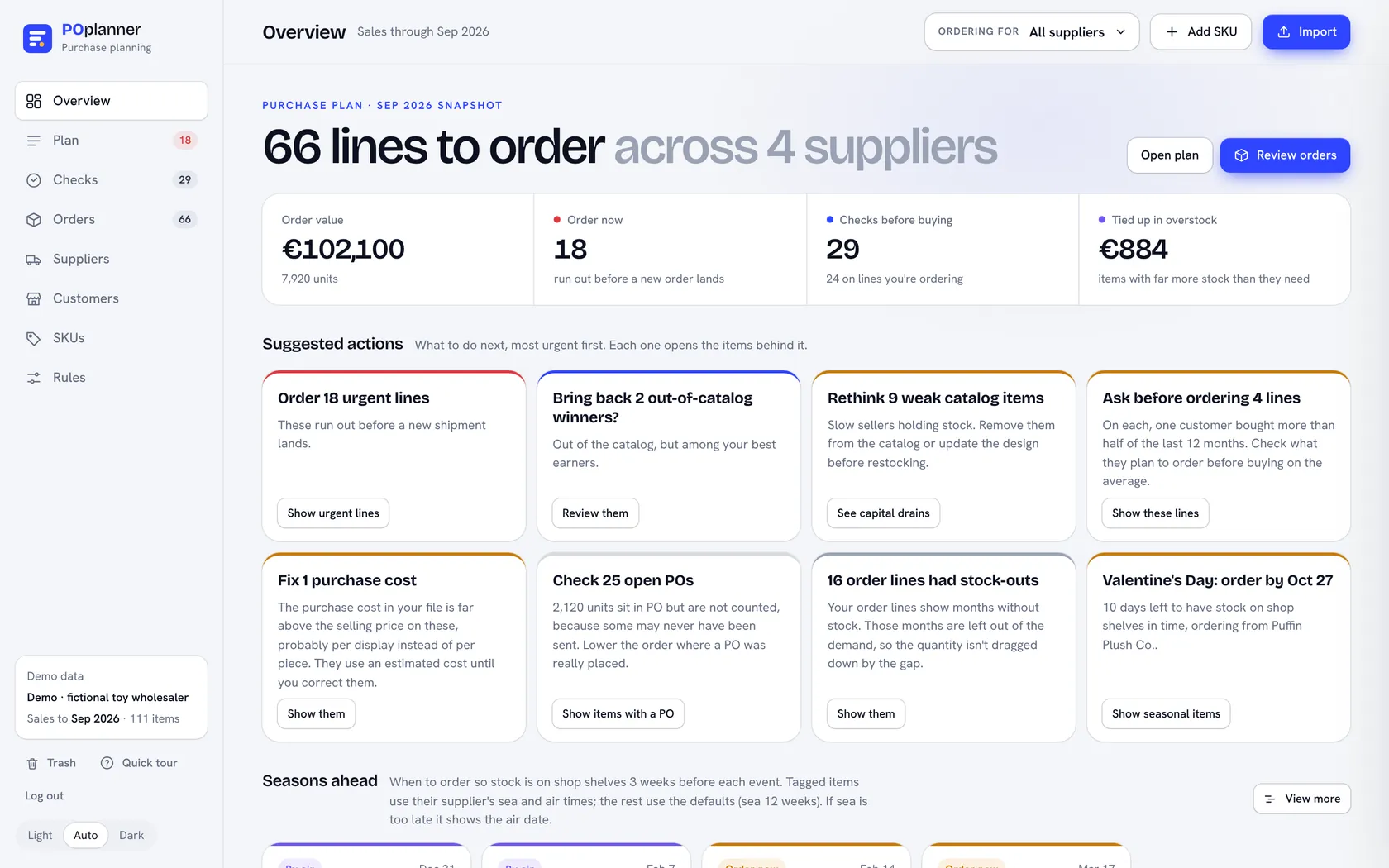
- Sea and air side by side. Seasons ahead shows each season's sea order date (12 weeks by default) and air order date (4 weeks). Once the sea date has passed, the air date takes over. You set the weeks.
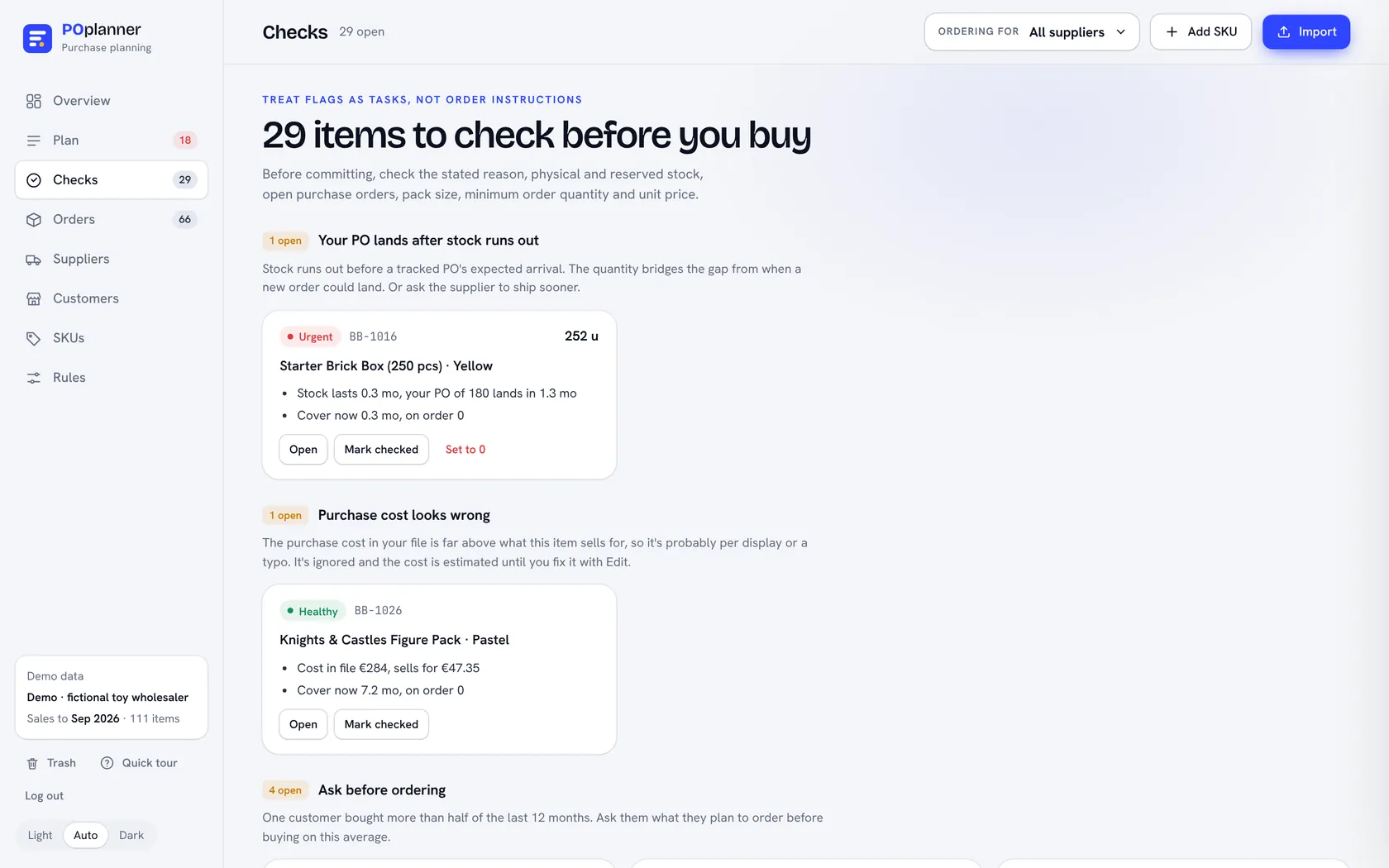
- Seasonal items planned from past seasons. An item that sells in the same months each year is planned from the same months in earlier years. A one-month spike that doesn't repeat is flagged and left out, and the line is marked for you to check.
- Seasonal items tagged. Items whose names contain seasonal words (in English, German or Dutch) get a quiet "possibly seasonal" tag. The word list is yours to edit.
An example
A toy wholesaler sells most of its Advent calendar sets in November and December. A plain average of recent months gets that wrong in both directions. POplanner plans the set from the same months in earlier years. If one month had been a one-off, it would be flagged, left out and put on the Checks screen, so you decide yourself.
This year's dates: Christmas 2026 order-by dates for wholesalers, by sea and by air.