In short: POplanner was built by people who work in distribution. We buy from several suppliers, ship by sea and by air, and sell to shops and businesses in many countries. We built the purchase plan we needed for our own orders, and now we offer it to other wholesalers and importers.
Where it started
Our week looks like yours. Factories quote lead times in weeks, a container takes 10 to 12 weeks to arrive, and customers expect the bestsellers to be on the shelf when they reorder. Every month someone has to decide what to buy, from whom, and how much.
For years we did that in a spreadsheet. We exported stock and sales from the ERP, pasted them in, repaired the formulas that broke, and went through the lines by feel. The plan worked as long as the person who built it was at their desk.
What kept going wrong
The spreadsheet made the same three mistakes again and again. We only noticed them when a shelf was empty or a pallet stood still for a year.
- Kite, rainbow120 a month37 a month. One customer's single order of 1,000 was flagged, not averaged in.
- Snow globe, ChristmasOrder in SeptemberOrder by mid-August by sea. Count back from the shop shelf, not from the warehouse.
- Raincoat, kids130 pieces144 pieces. The supplier packs 24 to a carton.
One large order from one customer made an item look like a bestseller, and we reordered stock nobody else wanted. Season dates were counted from the day goods reached our warehouse, so the stock was late for the shops, which order weeks earlier. Quantities ignored carton sizes, so the supplier rounded them for us, and not always in our favour.
What we changed
We turned the habits of our best buyers into rules and wrote them into one tool:
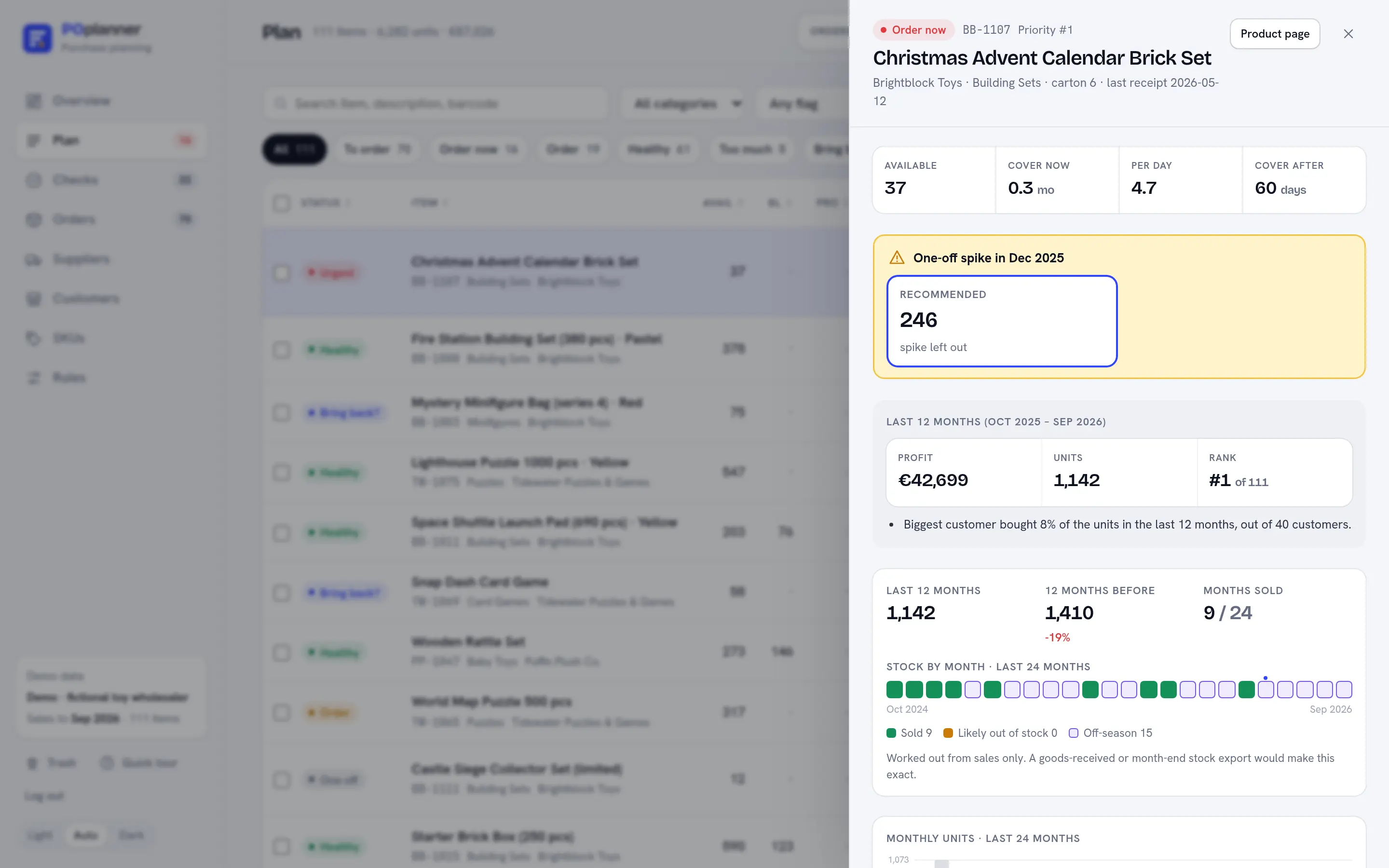
- One-off spikes and stock-out months are flagged, with a recommended quantity that a person checks.
- Order-by dates are counted back from the shop shelf, by sea and by air, for 13 selling seasons and any dates of your own.
- Quantities are rounded to full cartons.
- Every line shows its reason and a confidence score, so anyone on the team can see why a number is there.
It reads the same ERP export we used to paste, and it never writes anything back to the ERP. The buyer still decides. The plan no longer depends on one person.
Why we offer it to others
When we looked for software, we found two kinds. Tools for online shops plug into a web store and price by its revenue. Tools for large distributors start with a sales call, a setup project and a price in the tens of thousands. Wholesalers and importers with 5 to 100 people sit between the two, and most of them still plan in a spreadsheet.
POplanner is for that middle. It has one public price, it runs in the browser, and you can try it with sample data before you talk to anyone. We keep it focused on the planning itself: what to order, how much and by when.
See it with your own figures
Open the demo with a made-up toy wholesaler, read how it works, or request a walkthrough and plan your next order with your own export. The price is on the pricing page.